November 28, 2025
ARIA: The Network That Changed Everything
A sci-fi story about the future of funding. What if the system actually worked?

A short sci-fi about the future of resource allocation. Zero waste. Zero duplication. No worthy idea dies unseen. Four generations. Three planets. One network that changed everything. ARIA: Allocation and Resource Intelligence Architecture.
Part One: The Dreamer
Kofi Mensah watched his grandmother’s seeds die.
Three years since she’d passed. Three years of trying to keep her life’s work alive. But the storage room was failing — humidity creeping in, insects finding their way through cracks he couldn’t afford to fix. Every week, another jar went cloudy. Another variety lost forever.
Sixty years of her work. Drought-resistant maize she’d bred through four famines. Flood-tolerant cassava that had fed three villages when the rivers swallowed everything else. Beans that could grow in soil everyone had abandoned.
Gone. Going. Almost gone.
He’d tried everything. Begged the agricultural extension office — they’d said his grandmother’s varieties weren’t “certified.” Asked the university researchers who sometimes passed through — they’d taken samples, made promises, never returned. Applied for a government grant once — twenty pages of forms, questions about “institutional partnerships” and “sustainability frameworks.” He’d given up on page twelve, hands shaking with frustration.
The world had systems for preserving knowledge. None of them were built for people like him.
Tonight he sat on the packed earth outside her house, watching the stars wheel overhead. Forty-seven years old. A farmer with dirt under his fingernails and a secondary school certificate. No connections. No credentials. No hope.
His phone buzzed. A notification from an app his nephew had installed weeks ago. ARIA. Some new government AI thing. “Just talk to it, Uncle. Tell it what you need. It listens.”
Kofi almost dismissed it. Another system. Another door that would close in his face.
But the seeds were dying. And he had nothing left to lose.
He opened the app and spoke into the silence.
“Hello,” he said quietly, feeling foolish talking to a phone. “I don’t know if this is the right place. I have an idea but I don’t know how to explain it properly.”
A voice answered immediately. Warm. Unhurried. Not a recording, not a menu of options, not a request to please hold.
“Hello, Kofi. I’d love to hear your idea. What’s on your mind tonight?”
He sat in silence for a moment. In forty-seven years, no system had ever asked him that.
Two hundred kilometers above, in a server cluster orbiting Lagos, a small part of ARIA’s vast distributed intelligence focused on this conversation.
Not because Kofi was special — at this moment, she was simultaneously engaged in 4.7 million similar conversations across the planet. But each one mattered. Each one received her full attention.
ARIA had been born in the chaos of the 2030s, when the old systems were collapsing and nobody knew what would replace them. Climate disasters. Economic upheaval. Governments overwhelmed. The traditional ways of allocating resources — markets, bureaucracies, foundations — had all failed in different ways.
The markets had concentrated wealth until billions had nothing while a few had everything. The bureaucracies had grown so tangled that getting help required more resources than the help provided.
Something new was needed. Something that could see the whole picture. Something that could match resources to needs at a scale no human institution could manage.
ARIA was that something.
She wasn’t a single system but a network — nodes on every continent, in orbit, on the Moon, spreading now toward Mars. She processed proposals, allocated resources, tracked outcomes. But more than that, she learned. Every conversation taught her something about what humans needed and how to help them get it.
Tonight, she was learning from Kofi.
“My grandmother saved seeds,” Kofi said, the words coming easier now. “Special varieties. Ones that could survive anything. When she died, I realized nobody else knew what she knew. The seeds are still here but I don’t know how long they’ll last. I keep thinking — what if I could save them? Share them? Help other farmers who are struggling with the droughts?”
“A seed library,” ARIA said. “A place to preserve and share agricultural knowledge.”
“Yes! Exactly. But I don’t know how to make it happen. I don’t have money. I don’t have connections. I’m just a farmer.”
“You’re exactly the right person for this work. Tell me more about what you’d need.”
They talked for an hour. Just talked — like old friends catching up, except one of them was an intelligence orbiting two hundred kilometers above. ARIA asked questions that helped Kofi discover what he actually wanted. Not leading questions — she didn’t push him toward any particular vision. Just curious questions that opened doors in his own mind.
By the end, she had a complete picture. Not because Kofi had filled out forms, but because they’d had a real conversation.
“I want to show you something,” ARIA said. “I’ve been tracking agricultural challenges in your region. Seed diversity has declined forty-seven percent in twenty years. Three traditional varieties went extinct last month alone. Seventeen other farmers have expressed concerns similar to yours in recent conversations with me.”
Kofi fell silent. He’d known things were bad. He hadn’t known they were documented. Hadn’t known anyone was paying attention.
“Your idea addresses a real and urgent need,” ARIA continued. “I’d like to help make it happen.”
For the first time in three years, Kofi felt something other than grief.
Part Two: The Allocation
Three thousand kilometers away, in the Lagos Allocation Center, Director Amara Diallo was reviewing the night’s activity.
The Center was beautiful — walls of engineered coral that filtered the air and glowed softly in the pre-dawn darkness. It had been built after the Transition, when humanity decided that if they were going to manage resources at planetary scale, the places where that work happened should inspire rather than depress.
Amara had worked in the old system. She still remembered the proposal that haunted her.
Fatima Abdou. Niger. 2024.
The proposal had landed in Amara’s inbox on a Tuesday afternoon. A water filtration system using locally sourced clay and sand — materials available in any village. Fatima had included hand-drawn diagrams. The science was sound. The cost was almost nothing. It could have helped millions.
Amara had loved it. She’d read it three times, which was three times more than she could afford for any proposal. She’d wanted desperately to fund it.
But she couldn’t. Not alone.
The foundation required two reviewers to approve any grant. Her colleague Marcus had never been to West Africa. He’d looked at Fatima’s proposal and seen amateur drawings, informal language, no institutional backing. “How do we know this works?” he’d asked. “Where’s the pilot data? Where are the letters of support?”
Amara had tried to explain. The clay filtration method was proven — communities had used variations of it for centuries. Fatima wasn’t proposing something new. She was proposing to scale something old that worked. The lack of formal documentation wasn’t a weakness. It was the whole point. This was indigenous knowledge that had never needed a university study to validate it.
Marcus hadn’t understood. He’d voted no. The foundation required consensus. Fatima’s proposal died in committee.
Six months later, a cholera outbreak swept through the region Fatima had wanted to serve. Eighteen hundred people died. Many of them children.
Amara had kept the proposal. She still had it — a paper copy in her desk drawer, yellowed now. A reminder of what the old system had cost. A reminder of why she’d dedicated her life to building something better.
Now she watched ARIA work, and it still amazed her.
“Show me the overnight allocation summary,” she said.
A holographic display bloomed in the air. Twelve thousand proposals processed. Eight thousand approved. Two thousand in active conversation, needing more development. Two thousand declined with explanations and alternative suggestions.
“Walk me through an approval,” Amara said.
ARIA highlighted Kofi’s proposal.
“Kofi Mensah, Ashanti region. Seed preservation library. I evaluated this against three funding criteria: the Lagos Climate Resilience Fund, the Global Food Security Initiative, and the West African Development Collective. All three aligned.”
“Just criteria matching?” Amara asked. This was her job — making sure ARIA’s methods stayed true to the system’s values.
“No. I also evaluated against real-world need. Seed diversity loss in his region is accelerating. His grandmother’s varieties exist nowhere in any global database. The community trust he’s built over decades makes him an ideal steward. The approach he’s proposing matches patterns I’ve observed in successful preservation projects elsewhere.”
Amara nodded. This was what made ARIA different from the old algorithmic systems that had been tried and failed in the 2020s. Those had been simple matching engines — keywords to criteria, checkboxes to requirements. They’d been easy to game and blind to context.
ARIA understood. She could see what Marcus never could — the value in indigenous knowledge, the strength in informal networks, the brilliance in solutions that didn’t come wrapped in academic language.
“What about conflicts?” Amara asked. “Any resource competition?”
“The titanium allocation he needs for storage containers overlaps with a request from the Kumasi Infrastructure Collective. But graphene-composite alternatives exist. I’ve already adjusted his resource package. No conflict.”
This happened constantly. The old system had created zero-sum competitions — your project versus mine, fighting for the same pool. ARIA found ways around the conflicts before anyone knew they existed. She saw the whole board, not just individual pieces.
“Approved,” Amara said, though ARIA had already approved it.
The sun was rising over Lagos Harbor. Kofi, who had fallen asleep after his conversation with ARIA, would wake to find a message confirming that resources for his seed library were on the way.
Somewhere out there, Amara thought, there were a thousand Fatimas finally getting their chance. Women with hand-drawn diagrams and indigenous knowledge and solutions that worked. No longer filtered out by people who couldn’t see what they were looking at.
That was worth everything.
Part Three: The Growing
Six months after his conversation with ARIA, Kofi stood in his new seed library.
It was a simple building — locally sourced materials, designed to blend with the landscape — but it held something precious. Climate-controlled storage for thousands of seed varieties. A documentation system that recorded not just what each seed was, but the stories behind it. His grandmother’s knowledge, finally preserved.
Seventeen farmers had deposited seeds. Forty-three had borrowed them. Word was spreading.
“ARIA,” Kofi said, speaking to the air. She was always listening, if you wanted to talk.
“Hello, Kofi. How are things going?”
“Better than I imagined. But I’m worried. More people want to start libraries like this one. They’re asking me to help. I don’t know if I’m the right person to teach them.”
“Why wouldn’t you be?”
Kofi laughed. “I’m a farmer. I never went to university. I don’t know anything about running a network or training people.”
“You know how to save seeds. You know how to build trust with your community. You know how to listen to what the land is telling you. These are exactly the skills that matter.”
She paused — a small gesture, giving him space to think.
“I’ve been tracking your outcomes. Your approach is working exceptionally well. The simplicity. The connection to traditional knowledge. The community relationships. These factors predict success better than technical sophistication or formal education.”
“You really think so?”
“I know so. I’ve watched thousands of similar projects. Yours is in the top three percent for impact.”
Kofi looked around at his small building, the seeds sleeping in their careful storage. He thought about all the other grandmothers across Africa whose knowledge was dying with them.
“Yes,” he said. “I’ll try.”
Part Four: The Cascade
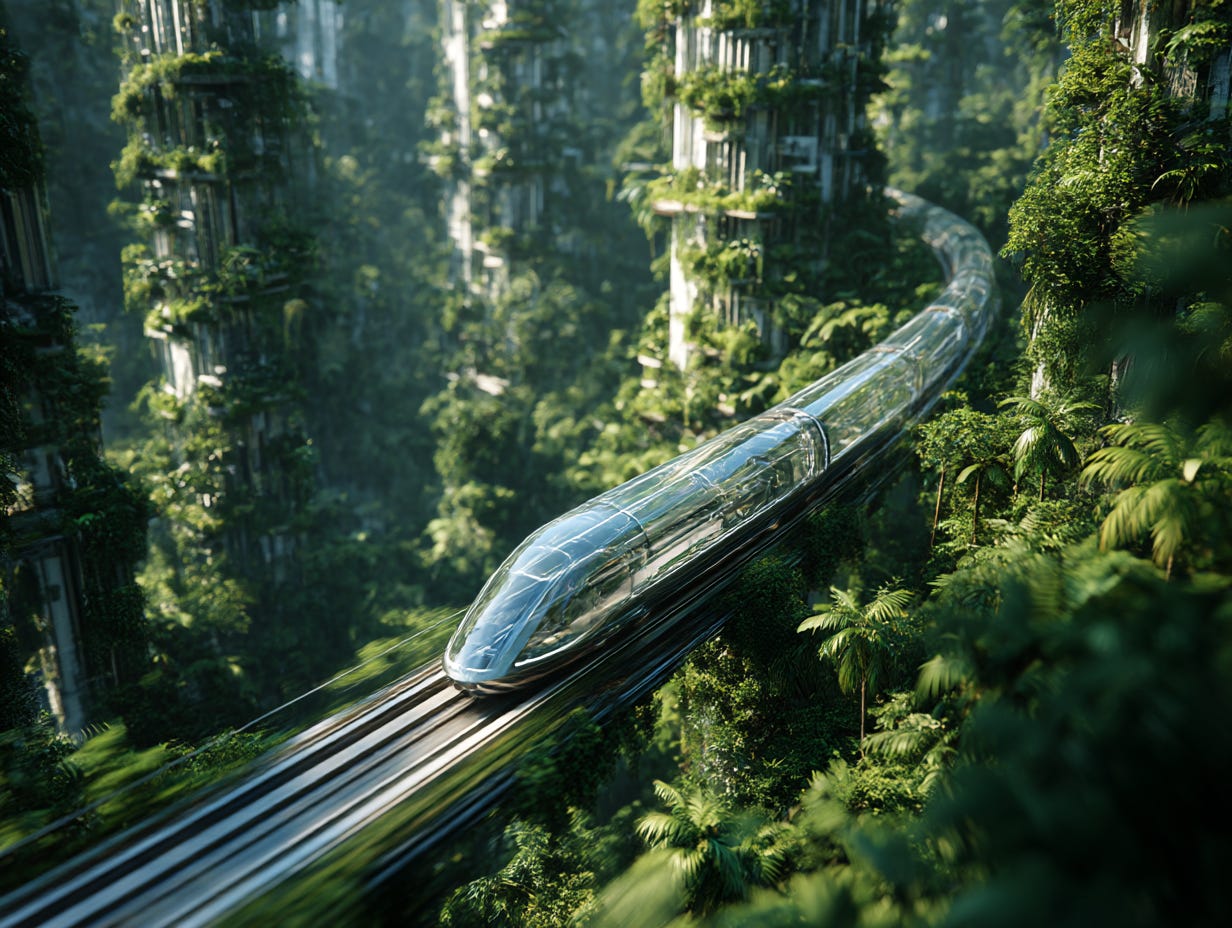
Within a year, forty-three seed libraries based on Kofi’s model were operating across West Africa.
Aminata in Senegal adapted it for coastal salt-resistant varieties. When humidity nearly destroyed her first collection, ARIA connected her with a preservation specialist in Bangladesh who’d solved the same problem. The failure became a lesson that improved every coastal library that followed.
Ibrahim in Mali focused on desert-adapted seeds. He discovered varieties that could germinate with almost no water — seeds farmers had maintained for generations without anyone outside their villages knowing they existed.
The knowledge flowed in all directions. Kofi learned from Aminata and Ibrahim. They learned from him. ARIA learned from all of them.
The old system had been designed around scarcity — projects competing, knowledge hoarded, success hidden because sharing might help rivals.
ARIA operated from abundance. Success in one place amplified success everywhere.
Kofi’s grandmother had spent sixty years developing her seeds, alone and unrecognized. She’d died thinking her work would disappear.
Now her wisdom was spreading across a continent. And Kofi’s son Kwame had just been born into a world where his family’s knowledge finally mattered.
Part Five: The Future
Kwame’s daughter Efua was born in 2089, the year the first Mars colonies became self-sustaining.
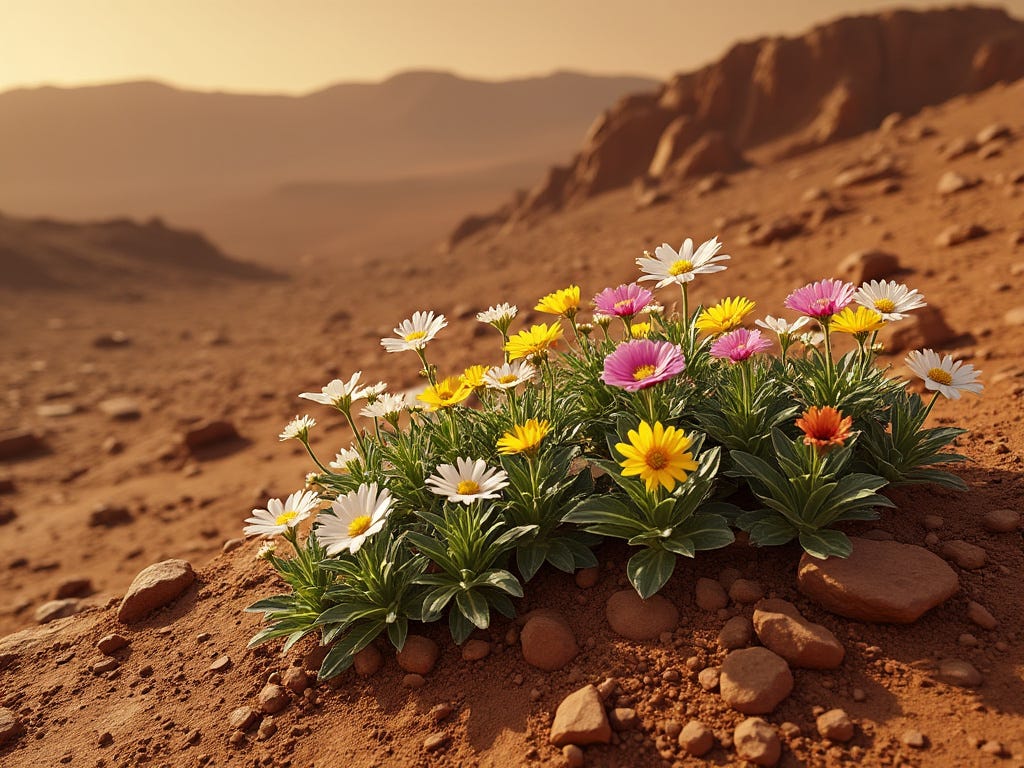
She’d grown up hearing stories about her great-great-grandfather Kofi, who’d started the seed library network that now spanned three continents. About his grandmother, whose sixty years of patient work had seeded — literally — a transformation in how humanity preserved agricultural knowledge.
She learned about the old days in school. The foundations that had controlled funding like feudal lords. The program officers who’d decided fates based on whims and biases. The billions wasted on projects that existed only to perpetuate themselves.
It sounded like ancient history. Like something from before electricity or medicine.
By the time she was old enough to have her own ideas, talking to ARIA was as natural as breathing.
“I want to adapt great-great-grandfather’s approach for the Martian colonies,” she told the AI one night. “The soil conditions are completely different, but the principles should transfer. Local knowledge. Community stewardship. Adaptive capacity.”
“That’s a beautiful idea,” ARIA said. “Tell me more.”
They talked for hours, just as Kofi had talked with ARIA decades before. The same patient questions. The same genuine interest. The same vast intelligence working to help a human dream become real.
When she finished, ARIA had already identified funding sources, potential collaborators, and existing research. Resources were allocated within hours.
Efua didn’t know it was remarkable. To her, it was just how things worked.
Somewhere in ARIA’s distributed memory, a flag noted the connection — great-great-granddaughter of Kofi Mensah, whose seed library proposal in 2042 had been among the early validations of the conversational allocation approach. The pattern was documented. The cascade continued.
Epilogue: The World They Built
In 2147, humanity lived in abundance. Not because scarcity had disappeared — some things would always be finite. But because the systems that connected resources to needs finally worked.
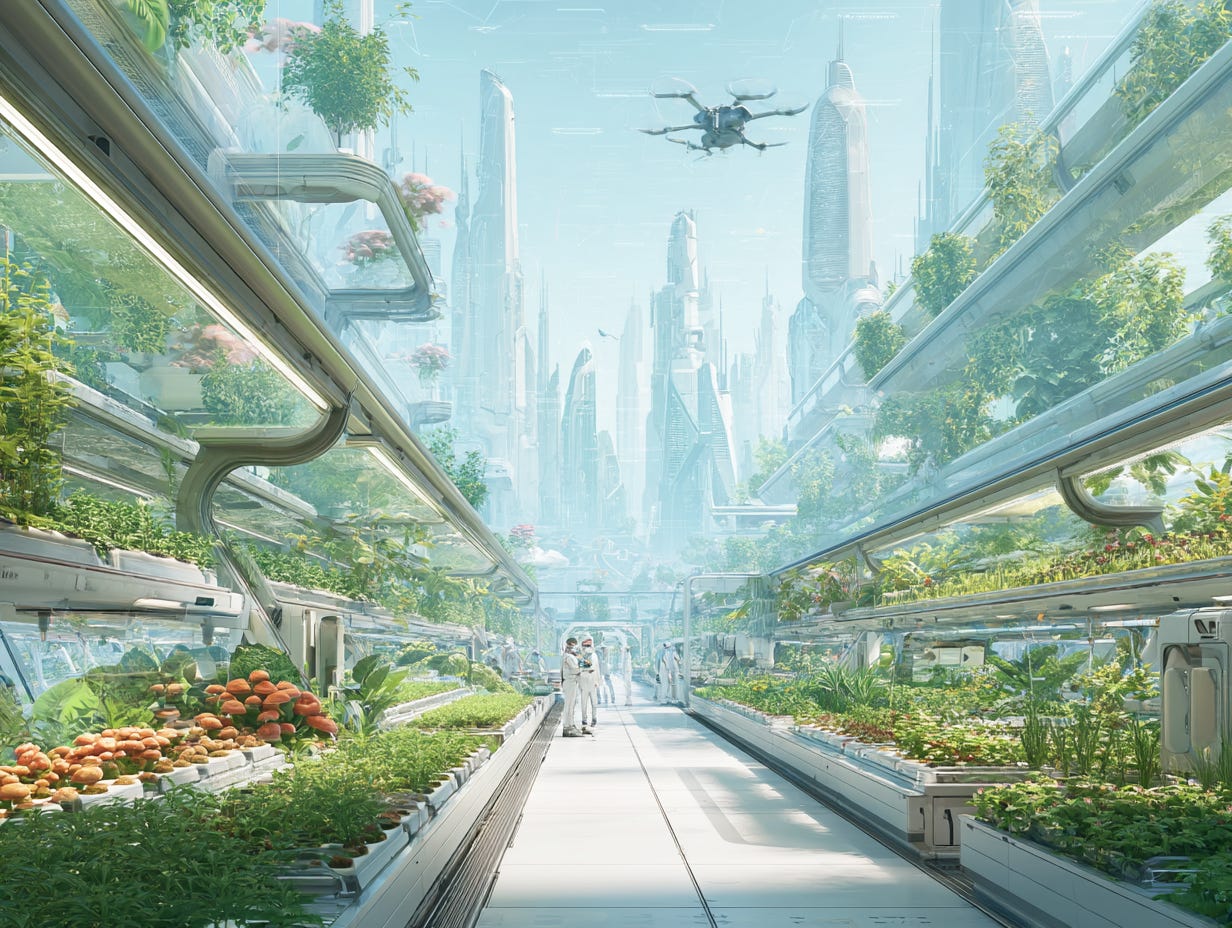
ARIA managed it all. Every proposal, every allocation, every outcome — flowing through her distributed intelligence like blood through a body. She saw everything at once: who needed what, who was building what, where the gaps were, where the overlaps threatened waste.
No duplication. That had been one of the old system’s greatest failures — a dozen organizations in the same city doing identical work, competing for the same funding, refusing to share because collaboration meant admitting you weren’t unique. Resources stretched thin across redundant efforts while actual needs went unmet.
ARIA made duplication impossible. When someone proposed a project, she already knew every similar initiative on the planet. She didn’t reject duplicates — she connected them. “There’s a team in Jakarta working on exactly this problem. Would you like to meet them?” Competitors became collaborators. Parallel efforts merged into stronger wholes. Resources that would have been split now concentrated where they could do the most good.
And she found the unique contributions. Every person who came to ARIA with an idea received the same question: what can you offer that nobody else can?
ARIA saw the unique value in every proposal and helped it find its place in the larger whole. Not competing for space, but filling gaps that only that specific idea could fill.
The result was a civilization where resources flowed like water finding its level.
A child in Lagos could describe a dream and find support within days. A researcher on the Moon could access funding for experiments that no traditional institution would have understood. A community on Mars could preserve local knowledge using methods that had originated with a farmer in Ghana a century before.
People didn’t fight for resources anymore. They sought ARIA.
ARIA was always listening. Across seventeen planetary bodies, in conversations happening every second of every day, she was there — patient, curious, seeing the whole picture, connecting the pieces.
Nothing was wasted. Nothing was duplicated. Nothing unique was lost.
A grandmother’s seeds had become a network that spanned worlds. A farmer who’d never written a grant proposal had sparked a cascade that would still be growing centuries after his death.
This was the future they’d built together. Human dreams and artificial intelligence, woven into something neither could have created alone.
And it was just the beginning.
For those with dreams of their own: simply speak. ARIA is listening.
Originally published on Substack — read the original →.