September 3, 2025
The Internet-Native Impact Organization: A Field Guide
They're NOT DAOs

As many of you know, I went deep down the Impact DAO rabbit hole.
I researched 12+ DAOs and interviewed 40+ contributors. Sixty-minute one-on-ones asking everything: How do they operate? Manage funds? Actually govern?
What got me started was watching Ukraine DAO form live on Twitter. They used every internet tool imaginable, including blockchain. I thought: this could be the future of organizing for good.
My Impact DAO research led to massive disappointment. And complete disillusionment with the DAO model for creating real impact.
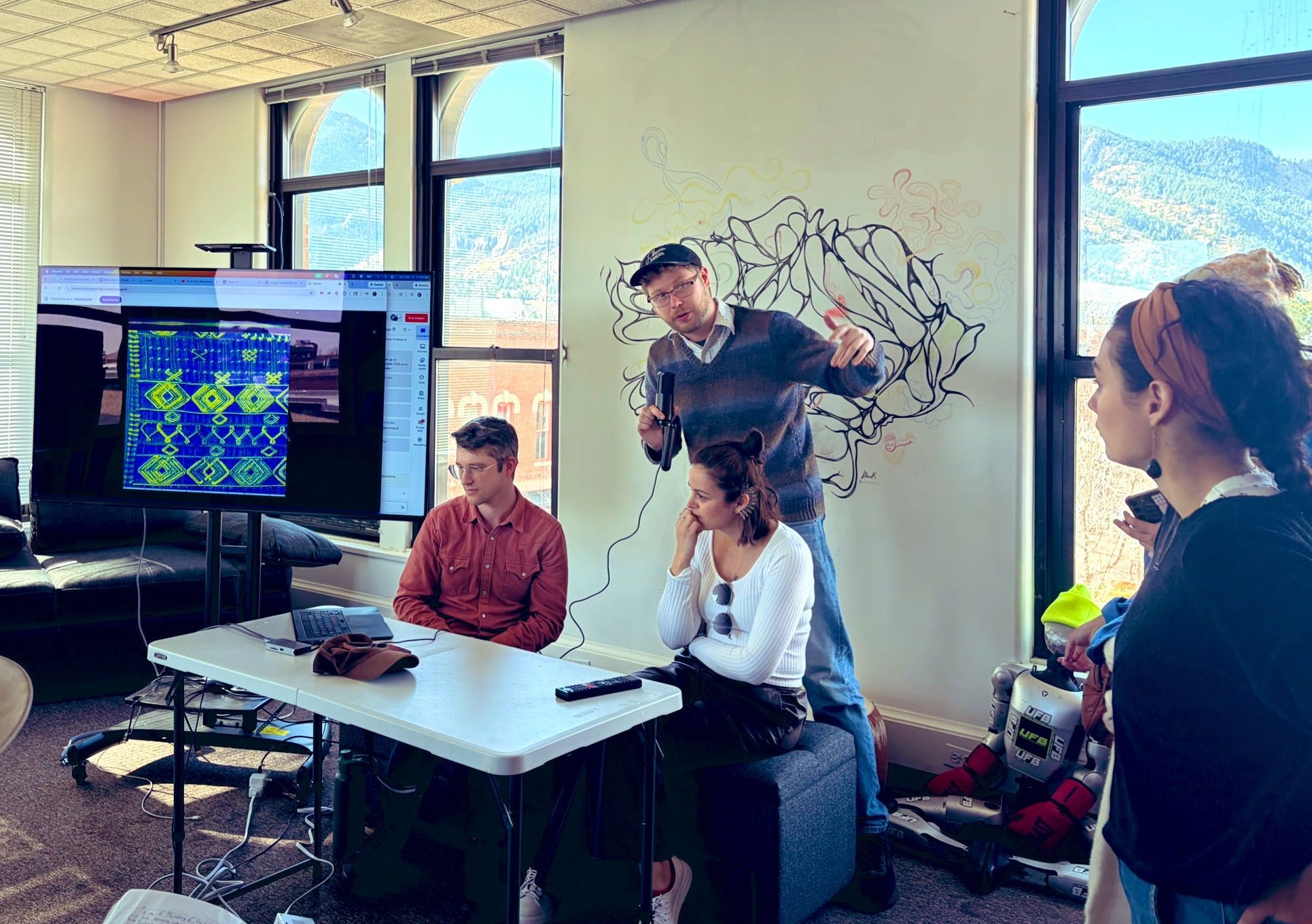
Check out this video where my core team member Matthew, DAO contributor Alkhomist, and I share our learnings — the ugly DAO truth, and our recommendations.
But I still believe in internet-native organizing
Here’s why: the internet makes it easier to meet people than real life does. Internet allows cross-border participation that global issues require.
So I’m back. This time, I’m defining what internet-native impact organizations will actually look like. And the minimal tools they need to get started quickly.
They’re NOT DAOs. No blockchain governance theater. No token economics experiments. Just effective, AI-powered organizing.
The 5 minimal essentials for internet-native impact organizations
1. The core mission (the “why”)
This is your north star. Your foundational document that guides strategy, attracts the right contributors, and gives you a clear reason to exist.
What it is: A simple, public document (1–2 pages) that clearly states your purpose, values, and high-level goals. It answers: “Why do we exist?”
Simple tool: A public Notion page, Google Doc, or Mirror.xyz post.
2. The AI-augmented hub (the “where”)
Your digital headquarters should be a smart workspace. Use AI to automate information management. Let humans focus on what matters: strategy and meaningful collaboration.
What it is: A central communication platform like Discord or Slack, supercharged with AI integrations.
Why it’s AI-native: AI bots summarize channel conversations. They automatically answer FAQs. They onboard new members. This frees up human time for actual strategy — not catching up on messages.
Simple tool: Discord or Slack with AI bots from their app stores.
3. The problem & project board (the “what”)
This is the evolution of the task list. Focus on high-level problems and strategic goals. Empower contributors to orchestrate AI tools to achieve them.
What it is: A shared project board listing outcomes, not outputs. A card might say “Launch Q4 Awareness Campaign” — leaving the contributor to use AI for blog posts, images, and social media.
Why it’s AI-native: It shifts humans from “doers” to “creative directors.” You guide AI to produce polished results. The value is in strategy and that final 10% of refinement.
Simple tool: Kanban board in Notion, Trello, or Asana.
4. The human oversight layer (the “who”)
With AI handling execution, the most critical human function is oversight. This layer provides final judgment, strategic direction, and secure resource management.
What it is: A small, trusted group of core contributors who act as the ultimate “human-in-the-loop.” They validate AI-assisted work quality, make key decisions, and manage organizational funds.
Simple tools:
- Treasury — Gnosis Safe multi-signature wallet.
- Decisions — Dedicated Discord channel for proposals. Use AI to summarize arguments. Follow with simple emoji polls for consensus.
5. Internet-native financials and fundraising
Internet-native organizations manage finances on blockchain for security and radical transparency. They receive funds — typically stablecoins like USDC to avoid volatility — into public wallet addresses.
Fundraising sources: Grants and NFTs. Crypto grants from ecosystem foundations. Transparent crowdfunding on platforms like Gitcoin. NFT sales to community. Direct donations to public wallet addresses.
Security: Multi-signature wallets (like Safe) act as digital vaults requiring multiple core members to approve transactions. No single person controls the treasury. Think: joint bank account on blockchain.
Transparency: Spending happens through public proposal and approval processes. Transactions go directly to contributors’ wallets. All financial activity is permanently recorded on blockchain and viewable by anyone on explorers like Etherscan. Real-time, transparent bank statements. Pair this with simple spreadsheets for human-readable context.
The bottom line
DAOs promised decentralized impact but delivered governance theater. Internet-native impact organizations learn from these failures.
They embrace AI augmentation. They maintain human oversight where it matters. They use blockchain for transparency — not tokenomic experiments.
The future of organizing for good isn’t about perfect decentralization. It’s about leveraging internet-native tools to coordinate humans more effectively than ever before.
The mission matters. The tools should be invisible. The impact should be undeniable.
Ready to build the future of impact organizing? The internet is waiting.
If you have any questions or would like to chat about internet-native impact organizations, message me here, on X, or on LinkedIn.
Originally published on Substack — read the original →.